Giant Sloths in Florida: Myth or Real?
Unveiling Florida's Prehistoric Giants
Have you ever wondered if giant sloths once roamed the lands we now call Florida? Uncover the truth behind this fascinating chapter of Florida’s prehistoric past.
In this article, we will delve into the reality of giant sloths, their size, diet, and where you can see the remains of these magnificent creatures today.
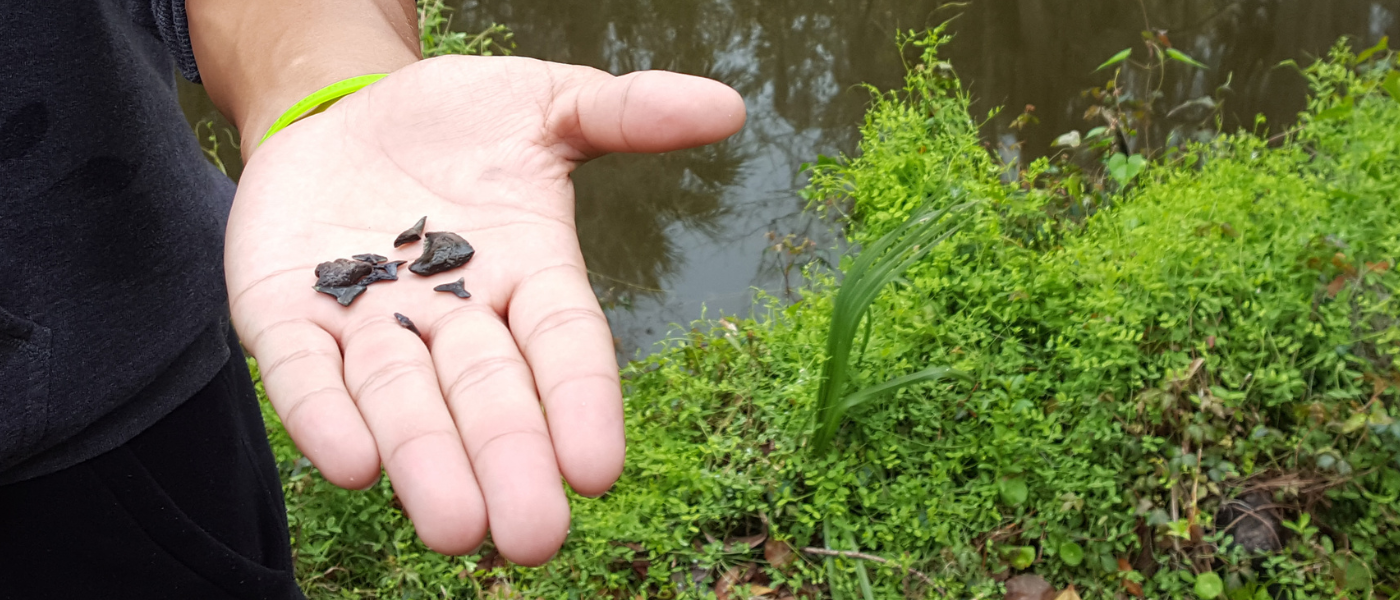
We’ll also explore exciting fossil hunting opportunities, such as the renowned Peace River, where not only shark teeth but a variety of prehistoric fossils can be found!
Coming Up:
- Giant Sloths in Florida: When Did They Live?
- Description and Size
- Did Giant Sloths and Humans Co-Exist?
- Where Can You See Giant Sloth Fossils?
- Feeling Adventurous? Look for Fossils in the Wild!

Giant Sloths in Florida: When Did They Live?
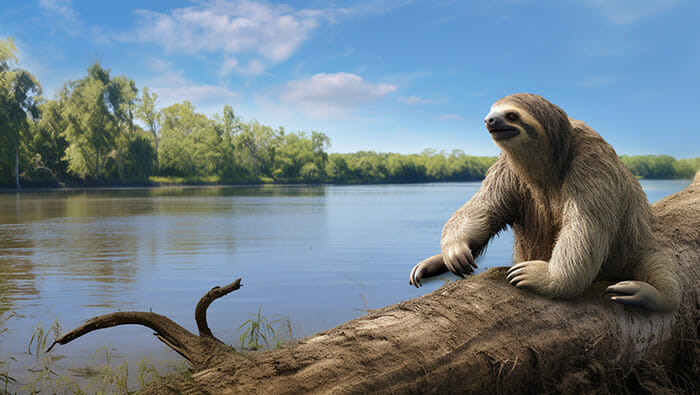
Contrary to being a myth, giant sloths did indeed inhabit what we now know as Florida. These impressive creatures were present during the Pleistocene epoch, which spanned from around 2.6 million to 11,700 years ago. Their existence in Florida is supported by significant fossil discoveries throughout the state.
Other creatures roaming the area that is now Florida, during that time period? Mammoths, mastadons and saber-toothed cats!
Description and Size
Giant sloths, belonging to the genus Megalonyx, were herbivorous mammals known for their enormous size. These gentle giants reached heights of up to 10 feet tall!!
With long, curved claws and a robust frame, they were adapted for both climbing trees and moving on the ground. Although fearsome in appearance, giant sloths primarily ate vegetation as their main source of sustenance.
Did Giant Sloths and Humans Co-Exist in Florida?
While experts tend to disagree on timelines, it is now accepted that humans lived in Florida as far back as 14,000 years ago. This means yes, humans and giant sloths DID co-exist!
Here’s an article of a significant discovery found in a North Florida sinkhole: Sinkhole discovery suggests humans were in Florida 14,500 years ago.
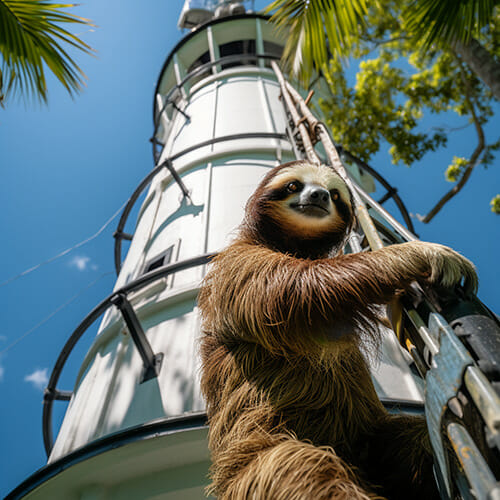
What would a 10 foot tall Giant Sloth look like climbing a Florida lighthouse, or hanging out on a beach in Key West? -a creative depiction by ai because it’s fun!

Where Can You See Giant Sloth Fossils?
If you’re intrigued by the idea of encountering giant sloth fossils in person, head over to the Florida Museum of Natural History in Gainesville.
The museum’s paleontology exhibit offers a captivating display of fossil specimens, including those of giant sloths.
You’ll have the opportunity to marvel at skeletal reconstructions and gain insights into the prehistoric fauna that once inhabited Florida.
Want to Search for Giant Sloth Fossils Yourself?
If reading about giant sloths has sparked your curiosity, you may be surprised to learn that Florida is one of the best places in the country for amateur fossil hunters.
While there’s no guarantee you’ll uncover the remains of a giant sloth, fossil enthusiasts regularly discover prehistoric treasures including shark teeth, mammoth bones, mastodon remains, horse teeth, and other Ice Age fossils throughout the state.
Peace River Fossil Hunting
The Peace River is perhaps Florida’s most famous fossil-hunting destination. Located in Central Florida, this slow-moving river has been revealing prehistoric fossils for decades.
Shark teeth are the most common find, but collectors have also uncovered fossils from giant sloths, mastodons, mammoths, ancient horses, and other creatures that once roamed Florida.
If you’re new to fossil hunting, consider joining a guided canoe excursion like this one by Paleo Discoveries LLC out of Wauchula. Local guides provide the necessary equipment, help you stay within legal collecting guidelines, and know the areas most likely to produce interesting finds.
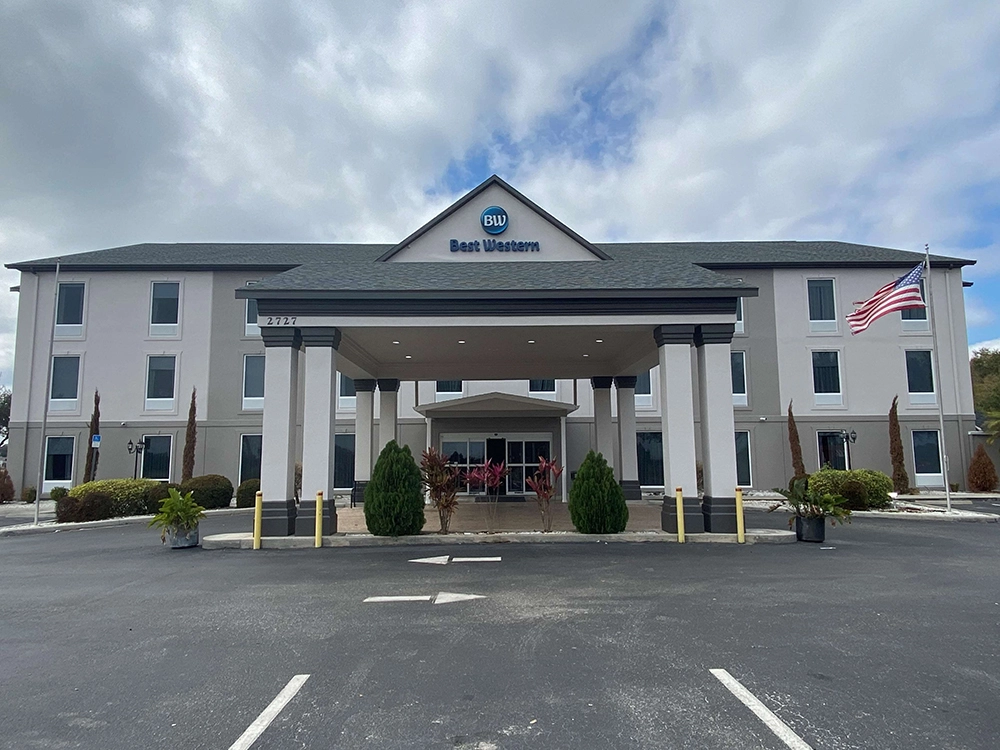
Closest reliable hotel to Wauchula and this great fossil hunting part of the Peace River is the Best Western Heritage Inn and Suites here.

Venice Beach Shark Teeth and Fossils
Known as the “Shark Tooth Capital of the World,” Venice Beach attracts visitors from around the globe searching for prehistoric treasures.
While shark teeth are the main attraction, fossil hunters occasionally discover other ancient remains along nearby beaches and waterways. Venice is an excellent destination for families looking to combine fossil hunting with a traditional Florida beach vacation.
Arcadia and the Peace River Region
The Arcadia area serves as a gateway to many of the best fossil-hunting locations along the Peace River.
Its small-town Florida charm, proximity to fossil-rich waterways, and easy access to guided tours make it a popular basecamp for fossil hunters hoping to uncover a piece of Florida’s prehistoric past.
Florida Fossil Hunting Rules and Permits
Before heading out on your fossil-hunting adventure, it’s important to understand Florida’s collection rules.
Collecting shark teeth and many common fossils is generally permitted in certain locations. However, vertebrate fossils—including remains from giant sloths, mammoths, mastodons, and other prehistoric animals—may require permits and reporting depending on where they are found.
Because regulations can change, always review the latest guidance from the Florida Department of Environmental Protection before collecting fossils on public lands or waterways.
Preserving Florida’s prehistoric history helps ensure future generations can continue learning about the incredible creatures that once called Florida home.
Plan Your Florida Fossil Hunting Adventure
Whether you’re fascinated by giant sloths, mammoths, ancient sharks, or simply enjoy outdoor adventures, fossil hunting offers a unique way to experience Florida’s natural history.
Interested in learning more?
Be sure to check out our guides to Florida shark tooth hunting, fossil hunting permits, and the best places in Florida to search for prehistoric treasures.