12 Ground Burrowing Animals You Might See in Florida
Have you ever spotted a mysterious hole while hiking through a Florida state park, walking along the beach, or exploring a nature trail and wondered what animal lived there?
Florida is home to an incredible variety of burrowing wildlife. Some species dig elaborate underground homes, while others borrow abandoned burrows for shelter or protection from the heat. Learning to recognize these animals can make your next outdoor adventure even more exciting.
Here are twelve fascinating ground burrowing animals you might spot while exploring the Sunshine State.
Disclosure: This post may contain affiliate links. If you make a purchase or booking through these links, I may earn a small commission at no additional cost to you. As an Amazon Associate, I earn from qualifying purchases.
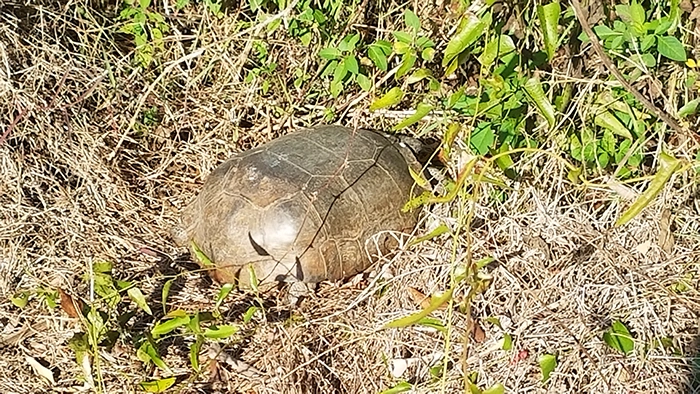
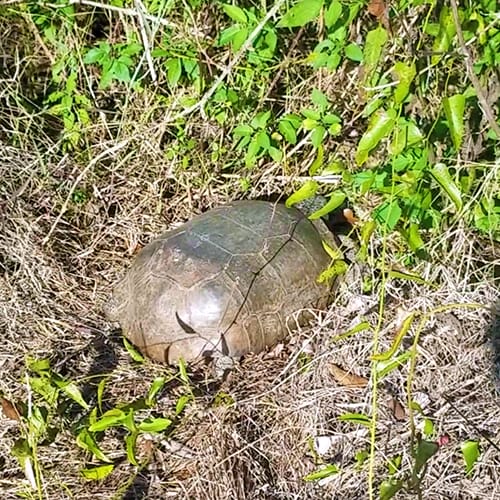
Gopher tortoise we found at Koreshan State Park in Estero, Florida
Gopher Tortoise 🐢
The gopher tortoise is one of Florida’s most remarkable **and important** burrowing animals. These gentle reptiles have lived in the southeastern United States for millions of years, long before people arrived in Florida. Today, they’re considered a threatened species in Florida, making every burrow an important part of the state’s natural heritage.
A single gopher tortoise can dig a burrow up to 40 feet long and 10 feet deep, creating shelter from predators, wildfires, and Florida’s intense summer heat.
Even more impressive, scientists have documented more than 350 different species using gopher tortoise burrows, including burrowing owls, gopher frogs, eastern indigo snakes, insects, small mammals, and countless other creatures. That’s why the gopher tortoise is often called a keystone species or an ecosystem engineer.
Where to Spot Them
Florida state parks
Pine flatwoods
Scrub habitats
Sandy nature trails
A Few Gopher Tortoise Fun Facts:
They can live 40–60 years, and some may live even longer in the wild.
They are strict herbivores, eating grasses, wildflowers, and other low-growing plants.
Their burrows stay much cooler in summer and warmer in winter than the outside air, which is why so many animals use them.
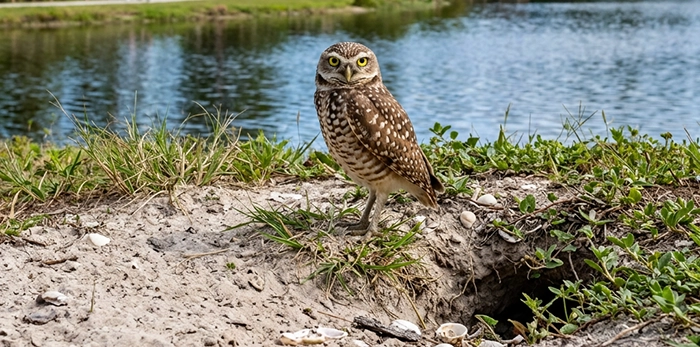
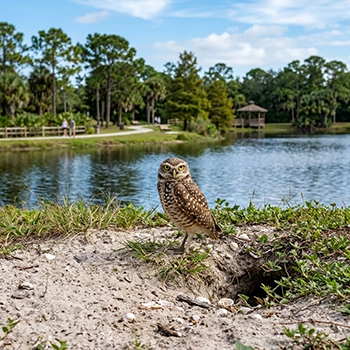
Burrowing owls sometimes use abandoned burrows created by tortoises
Burrowing Owls 🦉
Unlike most owls, burrowing owls spend much of their lives on the ground rather than in trees. They often use abandoned burrows or dig their own homes in open grassy areas.
Many Florida crayfish spend much of their lives underground. Look for little mud chimneys after rainy weather around wetlands and marshes. Florida is home to over 40 native crayfish species, and not all of them burrow.
Fun fact: these little creatures used to have populations in most local lakes and waterways, but real estate development has decimated most of them. If you happen to be lucky enough to see Florida crayfish in their natural habitat, leave them alone! They are an important part of the ecosystem.
Marsh Rabbits 🐇
Unlike the familiar Eastern cottontail rabbits often seen around neighborhoods and golf courses, marsh rabbits prefer freshwater marshes, wet prairies, and other habitats near water. Rather than digging deep burrows, they usually hide in shallow ground nests called forms, dense vegetation, or occasionally use abandoned burrows to escape predators and raise their young. They’re also surprisingly strong swimmers and may even dive into the water when threatened.
Some of the best places to look include Everglades National Park, Merritt Island National Wildlife Refuge, and other Florida parks with extensive wetlands. Visit around sunrise or sunset, when marsh rabbits are most active.
🌴 Florida Balm Fun Fact: If you’re staying at a Walt Disney World Resort, keep an eye out for wild rabbits hopping through the grassy lawns, flower beds, and wooded edges around the hotels and parks. Most are Eastern cottontails, but if you’re exploring areas near Disney’s Animal Kingdom or the resort lakes and wetlands, you may even spot the smaller, darker Florida marsh rabbit.
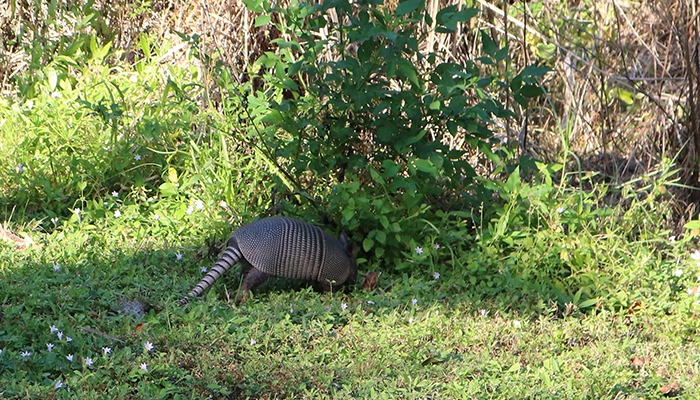
We spotted this armadillo while visiting Koreshen State Park in Estero.
Armadillos 🦔
Armadillos are among Florida’s most recognizable burrowing mammals. They dig shallow burrows beneath shrubs, tree roots, and brush piles, and they’re constantly searching for insects, worms, and grubs with their long noses.
They’re commonly spotted in places like Paynes Prairie Preserve State Park, Myakka River State Park, and many Florida state parks, forests, and nature trails—especially around sunrise and sunset, when they’re most active.
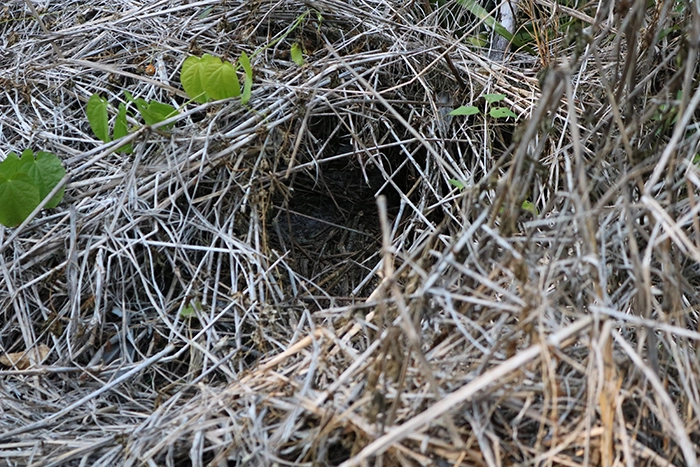
When we saw this burrow, there was a gopher tortoise nearby. But there was also an armadillo not far away. So we weren't sure who lives here.
Eastern Indigo Snake 🐍
North America’s longest native snake frequently uses abandoned gopher tortoise burrows, especially during cooler months.
Fortunately, these beautiful snakes are nonvenomous.
Gopher Frog 🐸
The gopher frog spends most of its life underground, using burrows dug by other animals—especially gopher tortoises—for shelter from predators and Florida’s heat. Although they’re found throughout most of Florida, they’re generally never found in South Florida.
🌴 Florida Balm Fun Fact: During breeding season, male gopher frogs make a deep, snore-like call that’s surprisingly loud for such a secretive frog. To learn more about the Gopher Frog, see this FWC article on the Gopher Frog here.
Six-Lined Racerunner 🦎
This fast-moving lizard digs shallow burrows in loose sandy soils where it can escape the afternoon heat. See my blog which includes this six-lined racerunner and photo: Florida Lizards 5 Most Common Reptilian Residents
Antlions 🐜
Not every hole belongs to a large animal. If you notice tiny funnel-shaped pits in dry, sandy soil, you’ve probably discovered an ant lion larva. These clever little insects dig cone-shaped traps and bury themselves at the bottom, waiting for ants or other small insects to slip down the sandy sides.
Once their prey falls into the pit, the hidden ant lion quickly grabs it with its powerful jaws. It’s one of nature’s smallest—and most fascinating—ambush predators.
Here’s an interesting article on Antlions in Florida from the University of Florida: Antlion Insects as Pets?
🌴 Florida Balm Fun Fact: Ant lions are sometimes nicknamed the “doodlebug.” As they wander through the sand looking for the perfect place to build a trap, they leave behind winding trails, or “doodles,” that inspired the nickname.
Native Mice & Rats 🐀
Not all Florida rodents are city pests! Native species like cotton mice, oldfield mice, cotton rats, and marsh rice rats dig or occupy small burrows throughout Florida’s forests, prairies, marshes, and state parks. These underground homes provide shelter from predators and extreme weather while also serving as nesting sites.
Although they’re rarely seen during the day, these small mammals play an important role in Florida’s ecosystems by dispersing seeds and serving as food for owls, foxes, snakes, bobcats, and other native wildlife.
🌴 Florida Balm Tip: If you notice several small holes (about 1–2 inches wide) winding through grassy areas or along nature trails, they may belong to one of Florida’s native rodents rather than a pest species.
Tips for Spotting Burrowing Wildlife
Want to increase your chances of seeing these fascinating animals?
Visit parks early in the morning
Walk quietly and stay on marked trails
Bring binoculars
Look for tracks, feathers, shells, or fresh digging
Never place your hands inside an unknown burrow
Respect Florida's Underground Wildlife
Many burrows are far more than simple holes in the ground—they’re homes, nurseries, and safe havens that support Florida’s unique ecosystems.
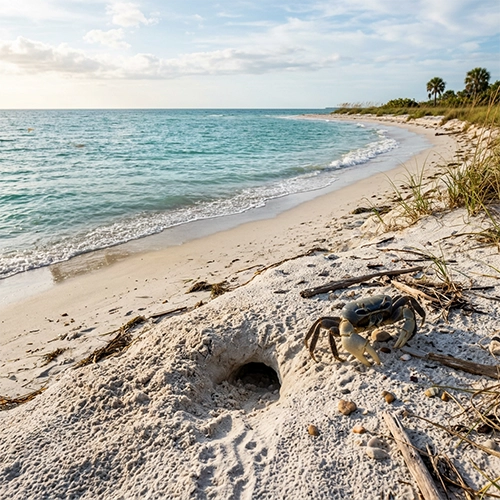
Whether you’re searching for burrowing owls in Cape Coral, watching ghost crabs along the beach, or spotting a gopher tortoise on a hiking trail, observing wildlife from a respectful distance helps protect these incredible animals for future generations to enjoy.