If you’ve ever walked along a Florida beach and noticed mysterious holes in the sand, you’re not alone.
Some are tiny. Some are round and clean. Some look like little tunnels. Some are big enough to make you stop and wonder what on earth is living down there.
In Florida, a hole in the beach sand could be made by a ghost crab, a land crab, ahermit crab, a nesting sea turtle, a shorebird, or even a person who forgot to fill in a hole before leaving the beach.
And while it may be tempting to poke around, dig deeper, or try to see what’s inside, the best rule is simple:
Don’t disturb the hole.
Some beach holes are wildlife homes. Some can be dangerous for people. And some can create real problems for nesting sea turtles and hatchlings trying to make their way across the sand.
Here’s what might have made that hole in the Florida beach sand — and why it’s usually best to admire it from a distance.
Disclosure: This post may contain affiliate links. If you make a purchase or booking through these links, I may earn a small commission at no additional cost to you. As an Amazon Associate, I earn from qualifying purchases.
Why You Shouldn’t Poke a Beach Hole
A hole in the beach sand might seem harmless, but in Florida, it could be part of a tiny wildlife world you can’t see from above.
Some holes are active burrows. Some are nesting areas. Some may be used by crabs, insects, birds, turtles, or other coastal creatures. Even if a hole looks empty, it may still matter.
There are also safety reasons to leave beach holes alone. A deep hole can collapse, twist an ankle, trap a child, trip a beach walker, or create obstacles for sea turtles and hatchlings at night.
A Good Beach Rule Is:
Look, take a photo from a respectful distance, and leave it alone.
If it’s a small wildlife hole, don’t poke it. If it’s a large hole someone dug in the sand, and you can see it is clearly empty, fill it in before leaving the beach.
Ghost Crab Holes on Florida Beaches
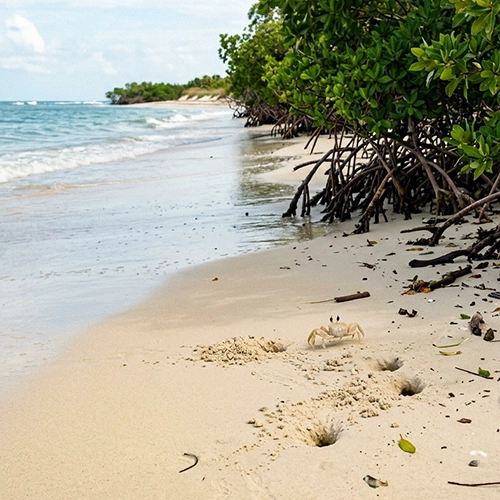
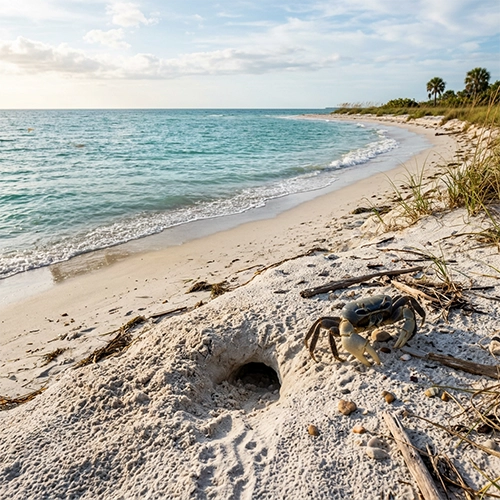
Ghost crabs are one of the most common reasons you’ll see small holes in Florida beach sand.
These pale, fast-moving crabs live in burrows above the waterline, often near dunes or dry sand areas. They are called “ghost” crabs because they are sandy-colored, quick, and often disappear into their holes before you get close.
Ghost crab holes can vary in size depending on the size of the crab. Some may be tiny, while others may be closer to the size of a tennis ball.
If you walk the beach early in the morning or near sunset, you may see ghost crabs darting across the sand, pausing near their burrows, or vanishing into the ground as you approach.
They may look spooky, but they are part of a healthy beach ecosystem. Enjoy watching them, but don’t chase them, dig them out, or block their burrow.
Land Crab Holes Near the Coast
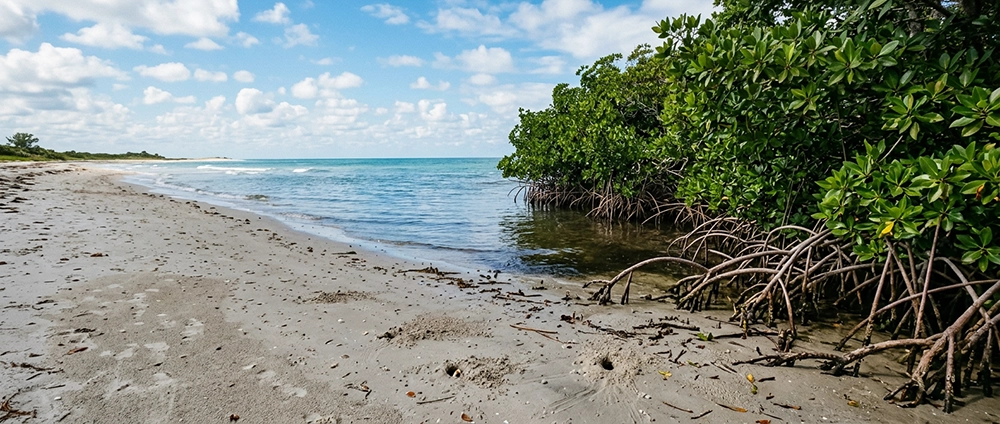
In some coastal parts of Florida, especially near mangroves, wetlands, low-lying areas, and warm coastal habitats, larger holes may belong to land crabs.
Land crabs are different from the tiny ghost crabs you may see racing across open beach sand. Some species are larger, stronger, and more noticeable, especially when they move between land and water areas.
Their holes may appear in sandy soil, yards, coastal edges, mangrove areas, or damp places near the beach rather than directly in the middle of a busy swimming area.
If you see a larger hole near coastal vegetation or mangroves, don’t stick your hand inside. Crabs can pinch, and the hole may also be used by other animals.
Hermit Crabs in Florida Beach Areas
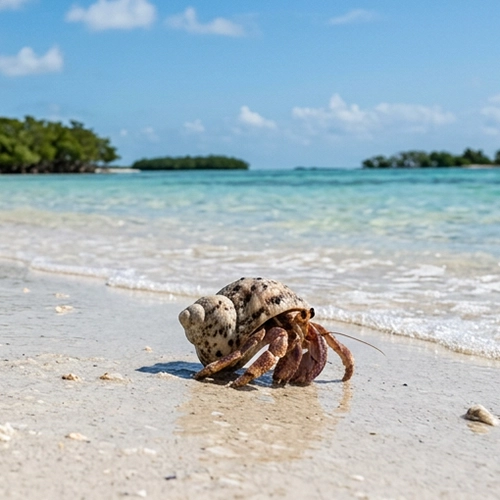
Land hermit crabs are another fun possibility in certain Florida beach and coastal areas, especially in warmer tropical environments like the Florida Keys. The specific type of land hermit crab that could be found is the Caribbean Purple Pincher hermit crab. Their life cycle includes burrowing under sand in order to molt, to regulate temperature and to hide.
Unlike ghost crabs, hermit crabs carry borrowed shells on their backs. The bigger the hermit crab, the bigger the shell — and sometimes the bigger the little hiding spot or sandy depression nearby.
You are not likely to see land hermit crabs on most Florida beaches, but in the right habitat, especially in warmer coastal or Keys environments, they can be part of the beach and shoreline wildlife story.
If you spot a land hermit crab, enjoy the moment and leave it where it is. Never take a hermit crab from the wild, and don’t collect shells that are being used by living creatures.
Hermit crab populations in Florida have significantly decreases over the decades due to shoreline development. Though they live on land, they need the ocean to reproduce.
And in addition to losing their habitats to development, they’ve also died off due to lack of shells. There are specific types of shells they use to protect their inner soft moist bodies, and without those types of shells available, they die. Removing those shells from the beach means a lack of shells available for these land hermit crabs.
If you go on a Florida beach vacation, chances are you’ve seen hermit crabs for sale in gift shops. If you do end up with hermit crab pets, visit hermitcrabpets.com to learn how to care for them.
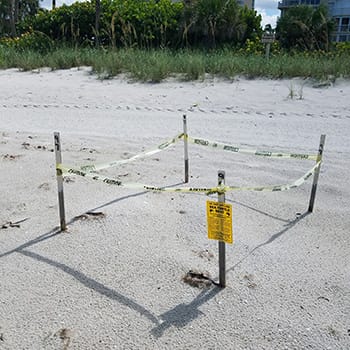
Sea turtle nests on Naples North Gulfshore Beach
Sea Turtle Nests and Why Beach Holes Matter
Not every beach hole is a small animal burrow.
During sea turtle nesting season, Florida beaches may have marked sea turtle nests, turtle tracks, and nesting activity that should never be disturbed.
A sea turtle nest does not usually look like a neat little crab hole if there are eggs inside. Generally, the mom turtle lays her eggs in the hole and then covers it over with sand.
Since sea turtles and their nests are protected, lots of orgs look for nests during the season. These nests (eggs below the surface of beach sand) will likely (hopefully) be marked off by trained turtle monitors, or you may notice tracks in the sand early in the morning. If you see stakes, tape, signs, or a marked nesting area, stay completely outside the boundary.
This is one of the biggest reasons to be careful around beach sand. Holes, sandcastles, chairs, tents, trash, and other obstacles can make it harder for nesting turtles and hatchlings to move safely across the beach.
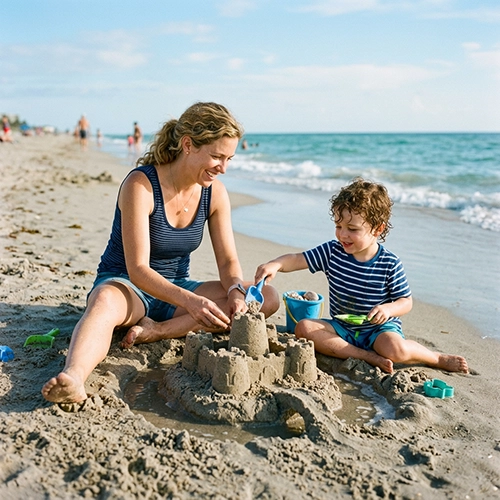
If you dig a hole during a beach day, fill it in before you leave. If you build a sandcastle, flatten it before you go. A clean, dark, flat beach is much safer for sea turtles.
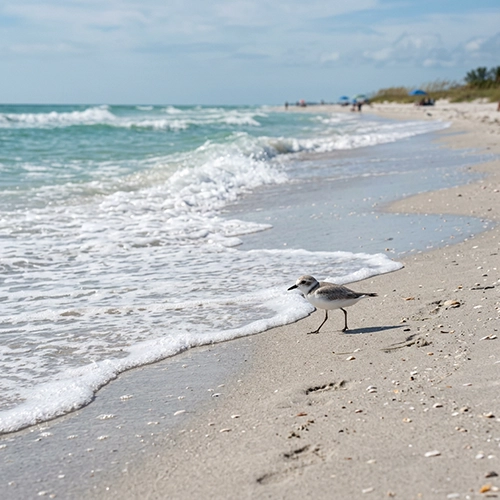
Snowy plover
Shorebirds and Other Beach Wildlife
Most Florida shorebirds do not dig deep burrows in the beach sand, but some do something that can be even easier to miss: they nest right on the ground.
Beach-nesting birds may lay eggs in shallow scrapes, small depressions, or barely visible spots in the sand and shell. These nests can blend in so well that they may look like almost nothing at all.
In Florida, beach-nesting birds can include snowy plovers, Wilson’s plovers, least terns, black skimmers, and American oystercatchers. Snowy plovers, for example, are ground-nesters that use small scrapes in the sand, sometimes lined with bits of shell. Least terns and black skimmers may nest in open sandy beach areas, often in colonies.
This is one reason it’s so important to stay out of posted nesting areas, keep dogs away from protected zones, and avoid walking through dunes or roped-off sections of beach. If you see birds calling loudly, swooping, acting upset, or trying to lead you away, you may be too close to a nest or chick.
So while a shorebird may not be “living inside” a beach hole the way a crab might, a tiny scrape in the sand can still be an active nest. What looks like empty beach to us may be a fragile nursery for Florida wildlife.
Human-Dug Holes and Why You Should Fill Them In
Not every beach hole was made by wildlife.
Some of the biggest and most dangerous holes on Florida beaches are made by people digging in the sand. Kids may dig for fun, families may build sandcastles, or beachgoers may create deep pits and then walk away.
The problem is that these holes can hurt people and wildlife.
A deep hole can be hard to see at night. Someone walking, running, or responding to an emergency can fall in. A child can become trapped if the sides collapse. Sea turtles and hatchlings can also get stuck in holes or blocked by sand structures.
The solution is simple: if you dig it, fill it.
Before you leave the beach, flatten sandcastles, fill holes, remove trash, and take your beach gear with you.
How to Guess What Made a Hole in the Sand
You may not always know exactly what made a hole, but there are a few clues.
A small, clean hole in dry sand above the tide line may belong to a ghost crab.
A larger hole near mangroves, coastal vegetation, or damp sandy soil could be connected to land crabs or other coastal animals.
A tiny moving shell nearby might mean a hermit crab is in the area.
A marked-off section of beach with signs or stakes may be a sea turtle nest or protected shorebird area.
A huge pit, shovel marks, or a hole near a sandcastle is probably human-made — and should be filled in before leaving.
When in doubt, don’t touch it, don’t dig it, and don’t disturb it.
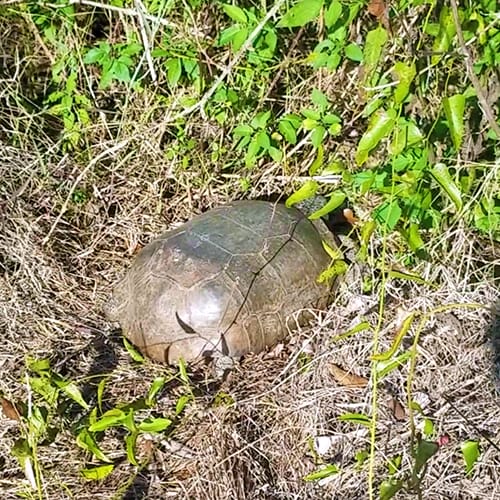
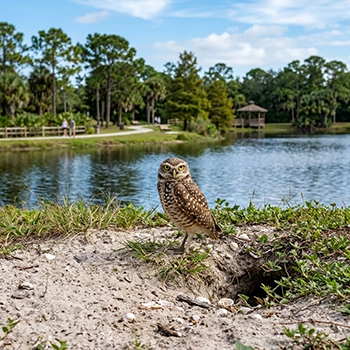
Other Florida creatures that have been known to dig holes in sand, but usually further from the shoreline: gopher tortoises, rodents, burrowing rabbits and more!
Final Thoughts
Florida beach holes can be surprisingly interesting.
Some are ghost crab burrows. Some are connected to land crabs or hermit crabs. Some beaches may have protected turtle nests or shorebird nesting areas nearby. And some holes are simply left behind by beachgoers who forgot to clean up before heading home.
The safest and kindest approach is to stay curious without interfering.
Take photos. Watch from a distance. Teach kids not to poke wildlife holes. Fill in any large holes your group digs. Leave the beach flat, clean, and safe for the next person — and for the wildlife that depends on Florida’s shoreline after we leave.